PlayKORE / Guides
Pokémon guides
Battles, catching, game availability, mobile adventures and transfers. Start with the game you are actually playing.
Start here
How to start playing Pokémon: a first adventure that makes sense
Choose a game that runs on the device you already have, pick a starter you like, and learn catching and type matchups before worrying about competitive training.
Read the guide ↗Browse the guides
70 guidesPokémon gameplayHow to start playing Pokémon: a first adventure that makes sense
Choose a game that runs on the device you already have, pick a starter you like, and learn catching and type matchups before worrying about competitive training.
2 min read Pokémon gameplay
How do Pokémon type matchups work?
A damaging move has a type. Compare that move’s type with the target’s type or types to find whether the hit is super effective, resisted, neutral or ineffective.
2 min read Pokémon gameplay
How do weaknesses work for dual-type Pokémon?
For a dual-type Pokémon, calculate the attack’s matchup against each defending type, then multiply the two results. Weaknesses can stack, cancel out or be overridden by an immunity.
1 min read Pokémon gameplay
What is STAB in Pokémon?
STAB means same-type attack bonus: a Pokémon usually deals more damage with a move that matches one of its own types. In ordinary main-series battles, the familiar baseline bonus is 1.5×.
2 min read Pokémon gameplay
Physical vs. special moves: which stat does an attack use?
In modern main-series games, a move’s category determines its usual stats: physical moves use Attack against Defense, while special moves use Special Attack against Special Defense.
1 min read Pokémon gameplay
What do Pokémon status conditions actually do?
Status conditions can damage a Pokémon over time, restrict its actions or reduce its performance. Their exact effects vary by game, so treat the condition’s name as the start of the explanation.
2 min read Pokémon gameplay
How to catch Pokémon without knocking them out
In a conventional turn-based Pokémon encounter, weaken the wild target, apply a useful non-damaging status condition when practical, and choose a ball suited to the situation.
2 min read Pokémon gameplay
Which Poké Ball should you use?
Choose a Poké Ball for the conditions of the encounter. An Ultra Ball is a convenient general option, but a specialist ball can be a better fit when its condition applies.
2 min read Pokémon gameplay
Why won’t my Pokémon evolve?
A Pokémon may need a level, friendship, an item, a trade or another specific condition to evolve. First identify the exact species, form and game; the requirement is not universal across the series.
2 min read Pokémon gameplay
How do trade evolutions work in Pokémon?
Some Pokémon evolve when traded, sometimes while holding a specific item. The required trade and item depend on the species and game, and Pokémon HOME storage is not a substitute for an in-game evolution trade.
2 min read Pokémon gameplay
How do friendship evolutions work?
A friendship evolution usually requires a Pokémon to reach sufficient friendship and then meet its evolution trigger. Some species also need a particular time of day, move or other condition.
2 min read Pokémon gameplay
Pokémon Natures explained: when do they matter?
Most main-series Natures increase one non-HP stat and decrease another, while some are neutral. They matter most when you want a Pokémon’s stats to support a particular role.
1 min read Pokémon gameplay
EVs vs. IVs: what is the difference?
IVs are individual stat values a Pokémon has, while EVs are training values it gains. They influence final stats in different ways, and the ways to adjust them depend on the game.
2 min read Pokémon gameplay
How to build a balanced Pokémon team for the story
Build a story team around useful matchups, reliable attacks and answers to shared weaknesses. Six different types can help, but type variety alone does not guarantee a balanced team.
2 min read Pokémon gameplay
What is move coverage in Pokémon?
Coverage means using attacks that help a Pokémon or team threaten opponents its main attacks struggle against. A move is useful coverage only if its matchup, power and attacking stat make sense.
2 min read Pokémon gameplay
Why did the other Pokémon move first?
Speed usually decides order among moves in the same priority bracket. A move with higher priority can act first even when its user is slower, and some field effects change normal ordering.
1 min read Pokémon gameplay
How do held items work in Pokémon battles?
A held item gives a Pokémon an effect while it carries that item. Some items are consumed when triggered; others keep working until removed or the battle ends.
2 min read Pokémon gameplay
How do Pokémon Abilities work?
An Ability is a passive or triggered property of a Pokémon. It can affect attacks, stats, weather and other battle rules, sometimes changing a matchup the type chart alone would suggest.
1 min read Pokémon gameplay
Pokémon breeding basics: Eggs, parents and inherited traits
In games with breeding, compatible parents can produce Eggs. The compatibility rules and the ways traits are inherited are separate from the steps used to obtain and hatch the Egg.
2 min read Pokémon gameplay
What is a Shiny Pokémon, and how can you recognize one?
A Shiny Pokémon has an alternate color palette and identifying effects or markings. Rarity, available hunting methods and whether an encounter can be Shiny depend on the specific game.
1 min readPokémon gameplayPokémon Scarlet and Violet: what to do first
Finish the opening that introduces the academy and exploration, then follow nearby challenges while building a flexible team. The open map gives you freedom, but opponents are not all scaled to your level.
2 min readPokémon gameplayHow does Terastallization change Pokémon battles?
In Scarlet and Violet, Terastallization changes a Pokémon’s defensive typing to its Tera Type and changes how its same-type attack bonuses work. Check both the defensive and attacking consequences before using it.
2 min readPokémon gameplayHow to prepare for Tera Raid Battles
Prepare for a Tera Raid by checking the boss’s Tera Type, likely attacks and difficulty. A useful raid Pokémon needs to survive long enough to contribute, not merely carry one super-effective move.
2 min readPokémon gameplayHow to play Scarlet and Violet with friends
Use Union Circle in the Poké Portal or at its in-game access points to form or join a group. Choose local or internet connection deliberately, then share the Link Code with the intended players.
2 min readPokémon gameplayPokémon Legends: Arceus: a guide to your first expedition
Treat your first Legends: Arceus expedition as field research: watch Pokémon, gather supplies, catch carefully and complete Pokédex tasks before pushing deeper into danger.
2 min readPokémon gameplayHow to catch Pokémon in Legends: Arceus
In Legends: Arceus, you can throw a Poké Ball at many wild Pokémon directly in the field. Use observation, concealment and the right approach; switch to battle when the target’s behavior calls for it.
2 min readPokémon gameplayAgile vs. Strong Style in Legends: Arceus
In Legends: Arceus, Agile Style trades power for an action-order advantage, while Strong Style emphasizes power at a timing cost. Check the action-order display before choosing either.
2 min readPokémon gameplayHow to complete Pokédex research in Legends: Arceus
A catch starts an entry in Legends: Arceus, but research tasks develop it. Open the Pokédex, read the species-specific tasks and complete useful combinations before reporting your findings.
2 min read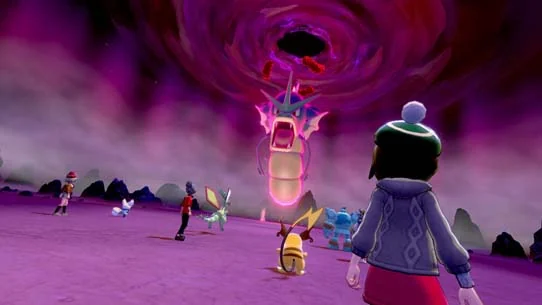 Pokémon gameplay
Pokémon Sword and Shield: what to do first
Follow the opening route into the Gym Challenge, build a few complementary teammates and use the Wild Area as a place to explore at your current level rather than a demand to catch everything immediately.
2 min readPokémon gameplayHow do Max Raid Battles work in Sword and Shield?
Max Raid Battles in Sword and Shield pit a group against a wild Dynamax Pokémon at a den. Check the raid’s difficulty and matchup, then prepare a Pokémon that can contribute throughout the fight.
2 min readPokémon gameplayHow to explore the Wild Area without getting overwhelmed
Explore the Wild Area in Sword and Shield by watching levels, weather and location. Some visible Pokémon are deliberately stronger than your current party, and you can return after more story progress.
2 min read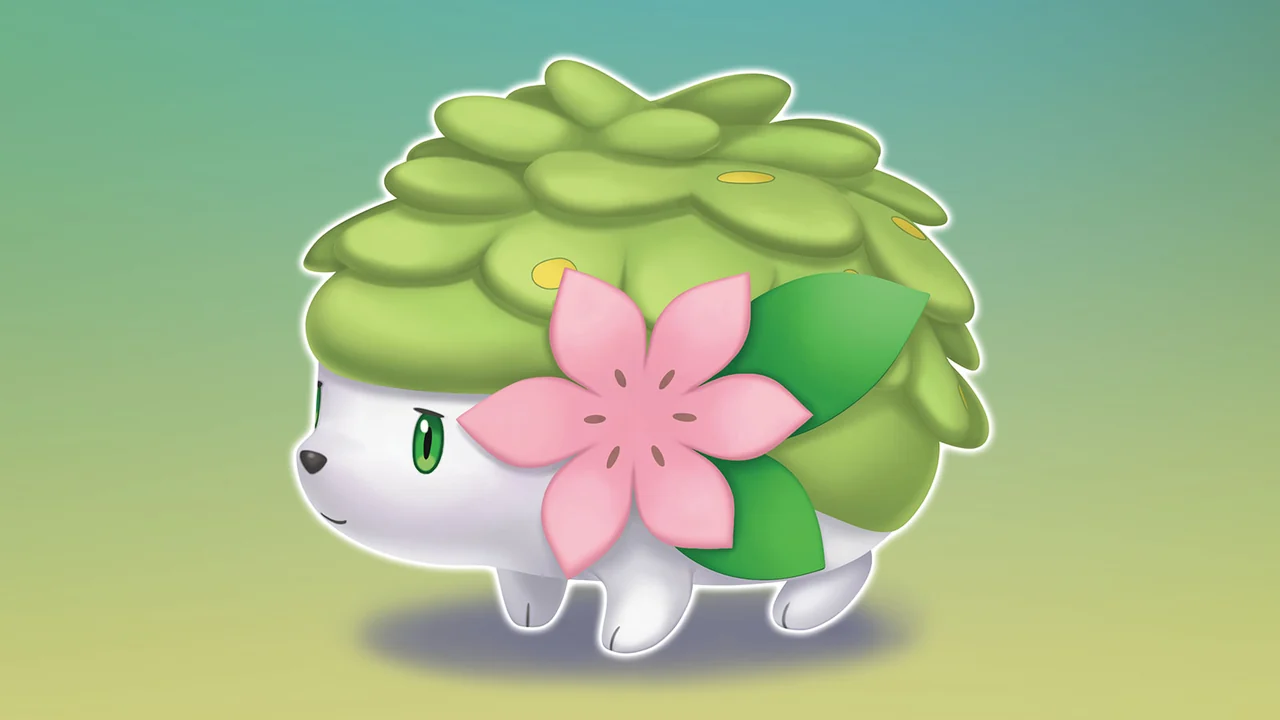 Pokémon gameplay
Brilliant Diamond and Shining Pearl: a practical starting guide
Follow Sinnoh’s early routes, develop more than one dependable attacker and explore side systems as they unlock. Brilliant Diamond and Shining Pearl have a directed journey, so the current story objective is a useful guide.
2 min readPokémon gameplayWhat can you do in the Grand Underground?
The Grand Underground in Brilliant Diamond and Shining Pearl combines digging, exploration and Pokémon hideaways. Decide which activity you want before starting a visit so you can bring the right supplies and use your time well.
2 min read Pokémon gameplay
Let’s Go Pikachu and Eevee: catching vs. battling
Let’s Go Pikachu and Eevee separate most wild catching from Trainer battles. Practice the throwing controls for catches, then build a team and move choices for the turn-based battles against Trainers.
2 min read Pokémon gameplay
How do battles work in Pokémon Legends: Z-A?
Legends: Z-A uses real-time battles: you and your Pokémon move during the fight, and moves have timing and positioning considerations. It is not the ordinary alternating-turn system of Scarlet and Violet.
2 min read Where to play
Can you play Pokémon Emerald on Switch?
Pokémon Emerald is not listed as an official Switch release in the Nintendo sources checked for this guide. The Switch releases of FireRed and LeafGreen do not also include Emerald.
1 min read Where to play
Where can you play Pokémon FireRed and LeafGreen?
FireRed and LeafGreen are available as standalone digital releases on Switch and playable on Switch 2. Original Game Boy Advance cartridges remain a separate way to play the 2004 releases.
1 min read Where to play
Where can you play Pokémon Platinum?
The original Pokémon Platinum is a Nintendo DS game. A compatible DS or 3DS-family system can play its DS cartridge; Switch does not accept DS game cards.
1 min read Where to play
Where can you play HeartGold and SoulSilver?
HeartGold and SoulSilver were released for Nintendo DS. Their original DS game cards need compatible DS or 3DS-family hardware; they are not Switch cartridges.
1 min read Where to play
Where can you play Pokémon Black and White?
Pokémon Black and White are Nintendo DS games. The original cartridges run on compatible DS and 3DS-family hardware, while Black 2 and White 2 are separate sequels rather than alternate names for the same adventure.
1 min read Where to play
Where can you play Pokémon Sun and Moon?
Pokémon Sun and Moon are Nintendo 3DS games. Existing physical copies and previously acquired digital copies are the relevant official options; the 3DS eShop no longer sells new software.
1 min read Where to play
Where can you play Pokémon X and Y?
Pokémon X and Y are Nintendo 3DS releases. Use a compatible 3DS-family system and an existing cartridge or legitimately acquired digital copy; Switch does not play the original 3DS game card.
1 min readWhere to playWhich Pokémon games can you play on Switch?
Switch has several different kinds of Pokémon games: traditional RPGs, Legends adventures, remakes, collecting spin-offs and battle-focused games. Choose by the activity you want rather than assuming they all play alike.
1 min read Where to play
Can you play your Pokémon Switch games on Switch 2?
Switch 2 plays compatible physical and digital Switch games, including supported Pokémon releases. Check Nintendo’s current compatibility entry for the exact title rather than assuming every older feature transfers unchanged.
1 min read Where to play
How to check whether a Pokémon can move to another game
Check the source game, transfer service and destination game before moving a Pokémon. A route that reaches HOME may still be one-way or may not allow that species or form into the game you want.
2 min read Where to play
DS vs. 3DS Pokémon games: which hardware do you need?
DS Pokémon cartridges and 3DS Pokémon cartridges are different formats. A compatible 3DS-family system can play most DS software, but an original DS or DSi cannot play 3DS games.
1 min read Where to play
How to keep your Pokémon save data safe
Use the game’s own save function, check its supported backup method and preserve an untouched copy before moving systems or changing emulator software. Pokémon HOME is not a backup of the full adventure save.
1 min read Where to play
Pokémon emulation: choosing the right emulator and save format
Choose an emulator for the original console family, supply a compatible game file and set up ordinary saves before starting. An emulator for Game Boy Advance, DS or GameCube is a different tool, not a universal Pokémon app.
1 min read Where to play
How to set up Game Boy Advance Pokémon games in mGBA
Download mGBA from its maintainers, open a compatible user-supplied GBA game file, configure controls and create an ordinary in-game save before using optional shortcuts such as fast-forward or save states.
1 min read Where to play
How to set up Nintendo DS Pokémon games in melonDS
Use the melonDS project’s current build and documentation, provide a compatible DS game dump and configure both displays, touch input and saves before settling into a long adventure.
1 min read Where to play
How to set up Colosseum and XD in Dolphin
Colosseum and XD are GameCube games. Dolphin can emulate GameCube software using a compatible user-supplied dump; configure a GameCube controller and memory-card storage before starting.
1 min read Where to play
How to find and install Pokémon Infinite Fusion
Start from the Infinite Fusion maintainers’ pinned download information or their linked repository. The project warns that websites claiming to be its official download site may be unaffiliated.
1 min read Where to play
Pokémon Insurgence: download, setup and save-file basics
Use the download options on the Pokémon Insurgence developer site. Choose a full installation for a first setup; a patch-only package assumes a compatible game installation already exists.
1 min read Where to play
Pokémon Reborn: where to start and how to install it
Get Pokémon Reborn through the developer’s Reborn site and follow the current package instructions for your operating system. Treat its updater and save files as a distinct setup from a console emulator.
1 min read Where to play
Pokémon Uranium: what it is and where its downloads come from
Pokémon Uranium is a standalone fan game set in Tandor. Its community continuation is distinct from the original team’s 2016 release, so check who maintains the download and which version the instructions describe.
1 min read Pokémon on mobile
Pokémon GO: what to do on your first day
On your first day in Pokémon GO, learn the map and catching controls, visit accessible PokéStops and save valuable upgrade resources until you understand what your Pokémon can do.
1 min read Pokémon on mobile
How to throw curveballs and land better catches in Pokémon GO
Spin the ball before releasing it to make a curveball, then aim for the target while its catch circle is at a size you can hit reliably. A consistent accurate throw is more useful than repeatedly missing an ambitious one.
1 min read Pokémon on mobile
Pokémon GO raids: passes, teams and catching the boss
A Pokémon GO raid has two separate challenges: defeat the boss with a suitable team, then use the awarded balls to attempt the catch. The raid type determines joining options, rewards and special rules.
1 min read Pokémon on mobile
CP vs. IVs in Pokémon GO: what should you keep?
CP summarizes battle-related strength at the Pokémon’s current level, while appraisal describes its individual Attack, Defense and HP values. Neither number alone tells you whether it is the best choice for your goal.
1 min read Pokémon on mobile
Should you power up or evolve first in Pokémon GO?
Choose based on the job you need the Pokémon to do and the resources available. Evolution changes the species, while powering up spends resources to raise the current Pokémon’s CP and HP; neither ordinarily improves its appraisal.
1 min read Pokémon on mobile
How to choose and use a buddy in Pokémon GO
Choose a buddy for a reason: earning family Candy, completing an evolution task or building buddy benefits. Check the Pokémon’s own progress screen because distance and task requirements vary.
1 min read Pokémon on mobile
How to organize Pokémon GO storage without losing favorites
Mark important Pokémon as favorites, use tags for decisions you have not made yet and filter duplicates in small groups. Appraisal, rarity, moves and personal value should be checked before transferring.
2 min read Pokémon on mobile
How to start using Pokémon HOME
Install Pokémon HOME on the devices you need and link the same Nintendo Account so both versions access the same collection. HOME stores and moves eligible Pokémon; it is not a playable replacement for their original games.
1 min read Pokémon on mobile
Pokémon HOME on Switch vs. mobile: what is different?
The Switch and mobile versions of Pokémon HOME share a collection when linked to the same Nintendo Account, but they expose different features. Use Switch for supported game connections and mobile for its trading and gift features.
1 min read Pokémon on mobile
How to move Pokémon from GO to HOME
Link GO and HOME through the intended Nintendo Account, complete HOME’s mobile introduction and use GO’s HOME transfer option. Pokémon sent from GO to HOME cannot be returned to GO.
1 min read Pokémon on mobile
Can you still move Pokémon from Bank to HOME?
Bank-to-HOME transfers remain subject to Pokémon Bank’s announced end of service: February 26, 2027 at 03:00 UTC. HOME Premium and access to the required existing Bank setup are part of the supported route.
1 min read Pokémon on mobile
Pokémon TCG Pocket: collecting and your first battles
Start Pocket with its collection tutorial, then complete the battle lessons before changing decks. Pocket is a separate card game with a different deck size, Energy system and win structure from the physical Pokémon TCG.
1 min read Pokémon on mobile
How to build your first Pokémon TCG Pocket deck
Build a Pocket deck around a small, consistent plan: a main attacker, the cards needed to reach it and an Energy setup that supports its attacks. Pocket’s 20-card limit makes unrelated additions especially costly.
1 min read Pokémon on mobile
Wonder Picks and pack points in Pokémon TCG Pocket
Wonder Picks offer a chance at a card from a displayed selection, while pack points can be exchanged under their expansion-specific rules. Check the actual reward pool and cost before spending either resource.
2 min read Pokémon on mobile
Pokémon UNITE: what to focus on in your first matches
In Pokémon UNITE, focus on earning experience, scoring with the team and arriving for important objectives. Winning a fight is useful when it creates an advantage your team can actually use.
1 min read