Start with the problems you face
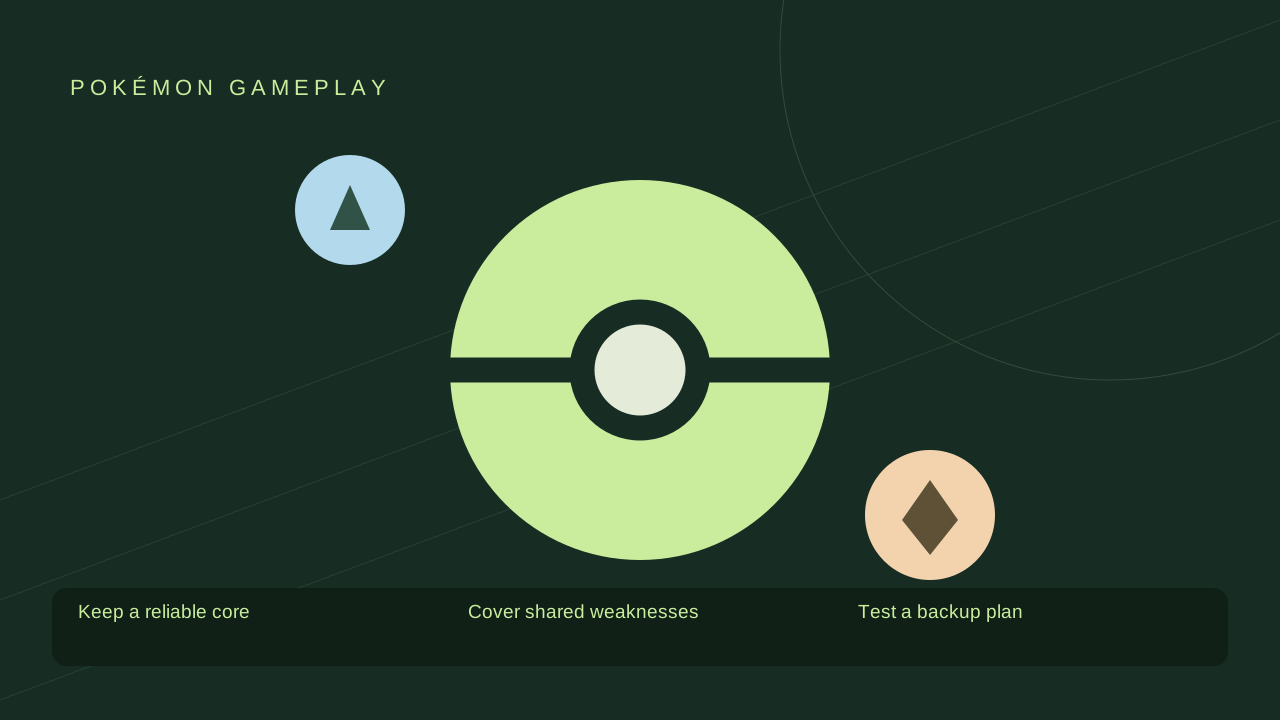
Keep a core Pokémon you enjoy, then add teammates that answer opponents it struggles against. If several team members are weak to the same common attacking type, add a safer switch rather than another Pokémon with the same problem.
The team weakness checker makes those shared defensive gaps visible. It only evaluates types: an Ability, item or temporary battle mechanic can change a real matchup, so read the result as a starting point.

Give each slot a purpose
Some teammates provide strong immediate attacks. Others can take a hit, spread a useful status condition, or help capture wild Pokémon. In games where field moves occupy attack slots, exploration needs can also affect your choices.
A team does not have to cover every imaginable opponent at once. Adapt to the next stretch of the story. Keeping an extra option in storage is often easier than forcing six permanent choices at the beginning.
Check the moves as well as the species
A Pokémon with four same-type attacks may have trouble when that type is resisted. A couple of reliable attacks plus useful coverage or a status option can be more flexible. Match physical and special moves to the Pokémon’s stats.
Level differences also matter. If one favorite receives all the experience, the team can appear well balanced on paper while only one member can safely enter battle. Rotate teammates into suitable fights rather than waiting for a crisis to discover they are underleveled.
Use a small test
Before a major challenge, ask three questions: who handles the opponent’s likely attacks, who can deal reliable damage, and what happens if that plan fails? Carry healing supplies where permitted and keep a second route to victory.
For story play, favorite species are a reasonable starting point. Balance is the process of supporting them, not a requirement to replace them with a list of rare or competitively popular Pokémon.
Sources & update notes
- Pokémon RPGs 101Source checked 2026-10-18 · Archived primary-source text
- PokéAPI v2 data documentationSource checked 2026-10-18 · Archived primary-source text
View the research record
The references below support the scoped mechanics or platform information. Examples and practical explanations are original PlayKORE writing.
Coverage: Source-researched explanation; no hands-on game or installation test claimed.
Reader question: How to build a balanced Pokémon team for the story
Version and region: US English; specific games, generations and other regions are labeled in the article.
- Source supports the game/version or platform described; practical planning advice and examples are PlayKORE’s own explanation.
- Source supports the game/version or platform described; practical planning advice and examples are PlayKORE’s own explanation.
Images: Original PlayKORE illustration. It is an explanatory graphic, not a game screenshot. Supporting diagrams are original PlayKORE graphics.
Record: Published 2026-10-18; last substantive update 2026-10-18; source check 2026-10-18.