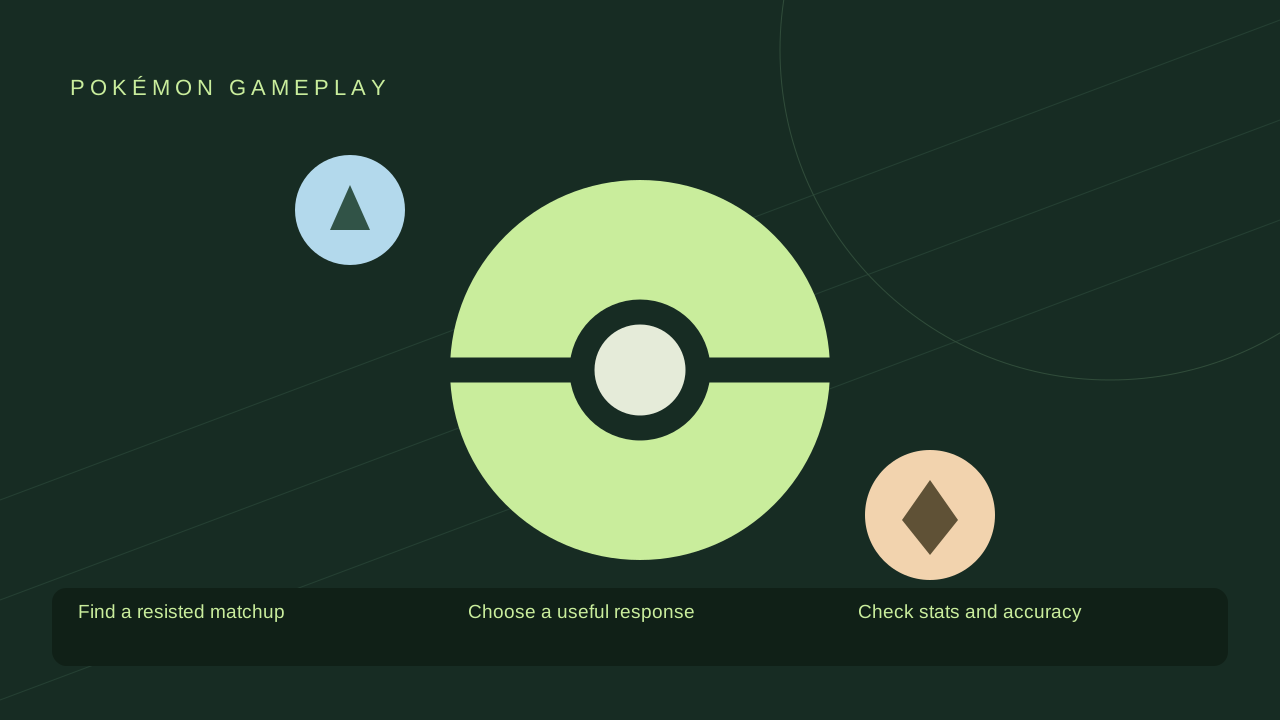
Look for the gap in your main attack
A reliable same-type attack is a good foundation. Next consider what resists it or is immune to it. A coverage move should help with a meaningful part of that gap rather than merely adding another type icon to the move list.
For example, an Electric-focused attacker cannot rely on an ordinary Electric move to damage a Ground target. Teaching another damaging type can provide an option, but switching to a teammate may still be the better play if the attacker is vulnerable to the response.

Do not ignore the attacking stat
A physical coverage move on a Pokémon with very low Attack may underperform. Compare it with a neutral move using the stronger stat and receiving STAB. The type label by itself is not a complete damage calculation.
Accuracy and side effects also matter. A dependable option can be more useful through a long story route than a powerful move that repeatedly misses or has very limited PP. If a move has a drawback, decide when it is worth paying.
Coverage is shared across the team
One Pokémon does not need an answer to everything. A teammate with a naturally strong matchup can cover a problem more efficiently than an awkward move on the current attacker. That frees a slot for recovery, setup or a useful status move.
Use the matchup checker to compare specific move types against complete defending types. Remember to select the right generation: a matchup or category copied from a modern game can mislead you in an older adventure.
When replacing a move, ask which encounters the new move solves and which option you are giving up. Four attacks that each have a reason to be there are more useful than four attacks chosen only because their base power looks impressive.
Sources & update notes
- Pokémon RPGs 101Source checked 2026-10-18 · Archived primary-source text
- PokéAPI v2 data documentationSource checked 2026-10-18 · Archived primary-source text
View the research record
The references below support the scoped mechanics or platform information. Examples and practical explanations are original PlayKORE writing.
Coverage: Source-researched explanation; no hands-on game or installation test claimed.
Reader question: What is move coverage in Pokémon?
Version and region: US English; specific games, generations and other regions are labeled in the article.
- Source supports the game/version or platform described; practical planning advice and examples are PlayKORE’s own explanation.
- Source supports the game/version or platform described; practical planning advice and examples are PlayKORE’s own explanation.
Images: Original PlayKORE illustration. It is an explanatory graphic, not a game screenshot. Supporting diagrams are original PlayKORE graphics.
Record: Published 2026-10-18; last substantive update 2026-10-18; source check 2026-10-18.