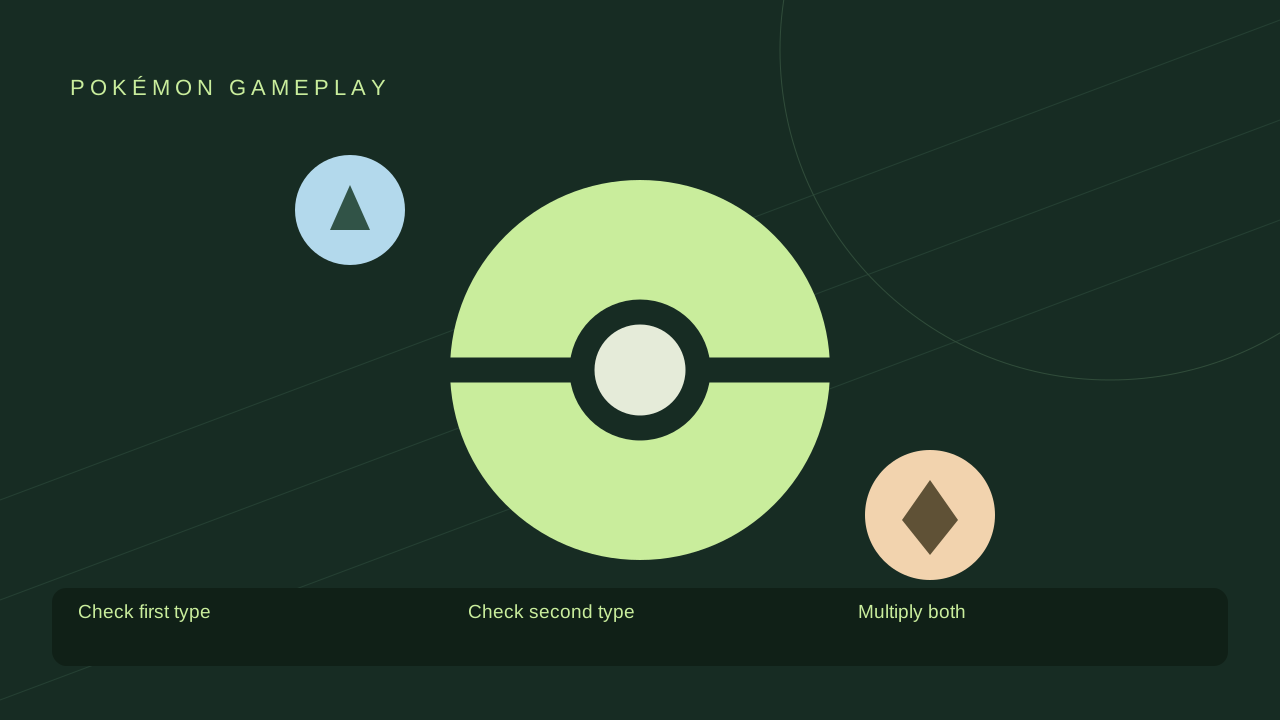
Calculate both halves
Imagine an Ice-type attack hitting a Dragon/Flying target under the modern main-series chart. Ice is super effective against Dragon and against Flying, so the two multipliers combine: two times two gives four-times effectiveness.
Now consider a Water attack against Water/Ground. Water is resisted by Water but super effective against Ground. Half times two equals one, so the combined type matchup is neutral. It is easy to miss this if you stop after reading only one of the target’s types.
| Individual matchups | Combined result |
|---|---|
| 2 × 2 | 4× weakness |
| 2 × 0.5 | Neutral |
| 0.5 × 0.5 | 0.25× resistance |
| Any multiplier × 0 | Immunity |

An immunity wins the multiplication
Ground against Electric/Flying gives an immunity because the Flying matchup contributes zero. The Electric weakness does not turn that into a damaging hit. A separate battle effect can change how an immunity behaves, but that is an additional rule rather than part of the normal type chart.
Likewise, an Ability is not another type. A Pokémon’s displayed types might suggest a weakness while its Ability prevents that attack from working. The type checker intentionally calculates typing; it does not simulate every Ability, item, weather effect or move exception.
Check the game and the form
Some species have forms with different types. Some Pokémon also changed typing between generations. Select the form and generation you are actually playing before building a team around a particular resistance.
When a team struggles with the same attacking type, look for a teammate whose combined typing provides a safer switch. Adding another individually strong Pokémon can leave the underlying shared weakness untouched.
Sources & update notes
- PokéAPI v2 data documentationSource checked 2026-10-18 · Archived primary-source text
View the research record
The references below support the scoped mechanics or platform information. Examples and practical explanations are original PlayKORE writing.
Coverage: Source-researched explanation; no hands-on game or installation test claimed.
Reader question: How do weaknesses work for dual-type Pokémon?
Version and region: US English; specific games, generations and other regions are labeled in the article.
- Source supports the game/version or platform described; practical planning advice and examples are PlayKORE’s own explanation.
Images: Original PlayKORE illustration. It is an explanatory graphic, not a game screenshot. Supporting diagrams are original PlayKORE graphics.
Record: Published 2026-10-18; last substantive update 2026-10-18; source check 2026-10-18.