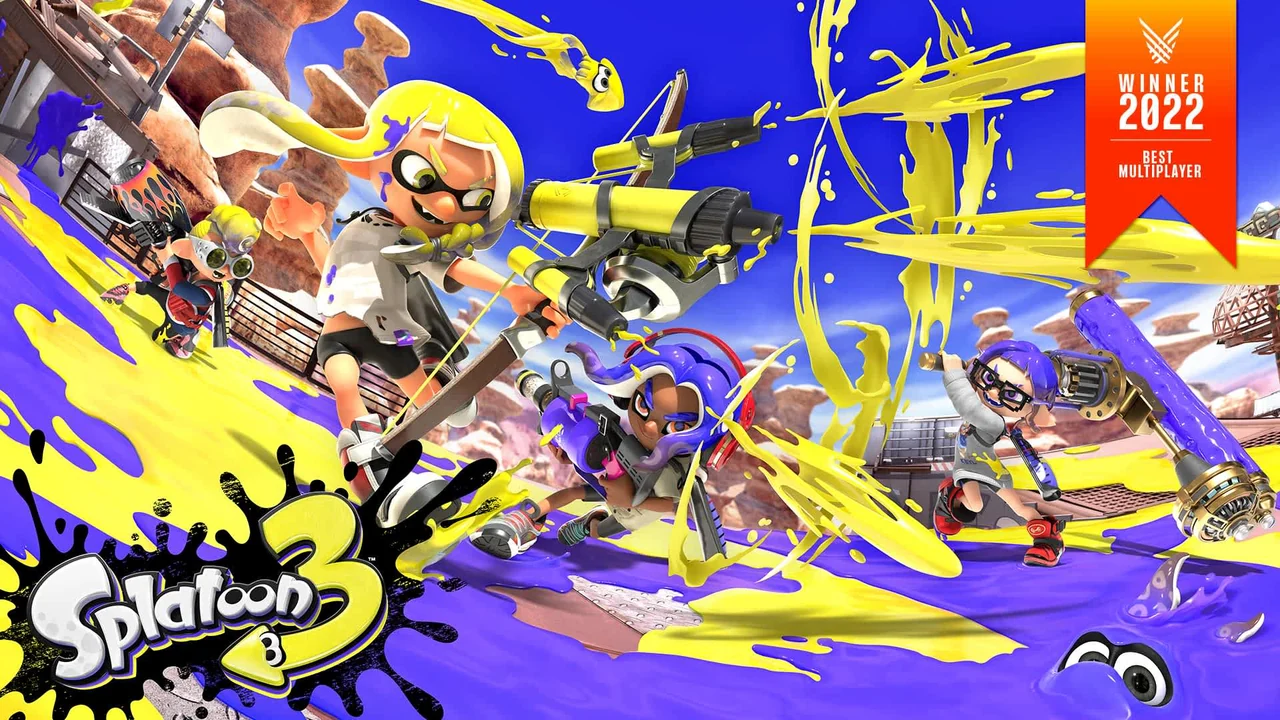
Paint routes your team can use
Your ink creates movement and refill opportunities. A connected route out of your base and through useful parts of the map can help the whole team more than repeatedly chasing one opponent.
Walls can help movement, but the scoring objective is about the relevant ground coverage. Read the mode’s rules instead of treating every painted surface as equal score.

Learn one weapon’s range
Try a weapon in practice and notice where it hits reliably, how quickly it uses ink and how its sub and special work. A short-range weapon needs a different approach from a long-range one.
Do not enter every duel from the same distance. Use cover and painted routes to reach a position that suits the weapon rather than fighting the opponent on their terms.
Survival preserves pressure
Retreating to refill or rejoining teammates can be better than trading one more risky shot. A team repeatedly returning from spawn has fewer chances to hold useful ground.
Super jumping without checking the landing area can turn a quick return into another defeat. Read the map and the situation before committing.
Keep modes distinct
Ranked-style objective modes and Salmon Run ask for different priorities. A Turf War habit is not a complete strategy for carrying an objective or fighting cooperative bosses.
Balance and maps change through updates. This guide covers basic decision-making, not a current weapon tier list or a claim that one loadout is best in every mode.
Sources & update notes
- splatoon — Nintendo USSource checked 2026-10-18 · Archived primary-source text
View the research record
The references below support the scoped mechanics or platform information. Examples and practical explanations are original PlayKORE writing.
Coverage: Source-researched explanation; no hands-on game or installation test claimed.
Reader question: Splatoon 3: what wins a Turf War?
Version and region: US English; specific games, generations and other regions are labeled in the article.
- Source supports the game/version or platform described; practical planning advice and examples are PlayKORE’s own explanation.
Images: Publisher promotional image. Official source and image credit. Copyright remains with the credited publisher and developers. Supporting diagrams are original PlayKORE graphics.
Record: Published 2026-10-18; last substantive update 2026-10-18; source check 2026-10-18.