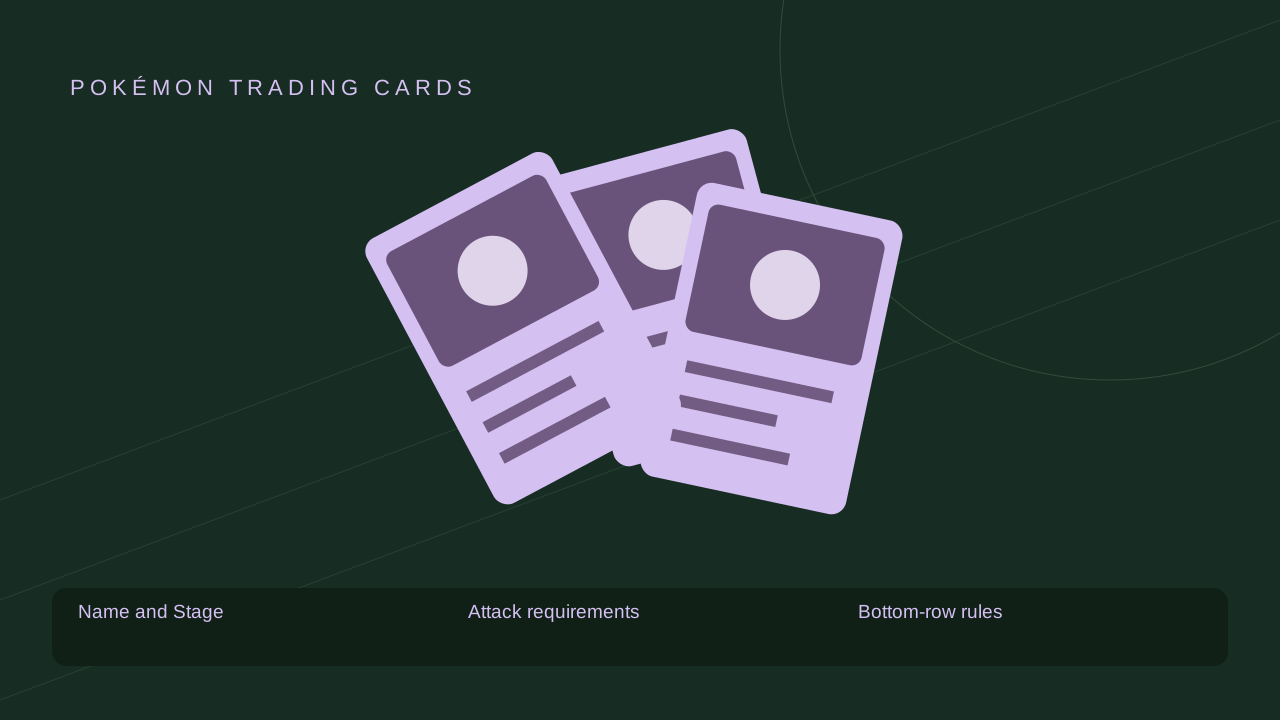
Identity tells you how it enters play
The name matters for evolution and deck-copy rules. A Basic can normally be played directly to the Bench; an Evolution card names what it evolves from. A Stage 1 card is not an opening Basic just because you own no earlier card.
HP is the amount of damage the Pokémon can take before being Knocked Out. Its type is used in relevant card-game interactions. Do not apply the video-game type chart: the card prints the Weakness and Resistance that matter here.

Attacks have a cost and an effect
Energy symbols beside an attack name are its requirement. They usually need to be satisfied by Energy attached to that Pokémon. Colorless symbols can be met by Energy of any type; colored symbols ask for the specified type.
The number beside an attack is not always the final damage. Read the effect text for additions, reductions, coin flips or other conditions. Some effects place damage counters directly rather than dealing ordinary attack damage.
Abilities are not a second free attack
An Ability explains its own timing and limits. Some work from the Bench; some need the Active Spot; some are automatic. Read the actual sentence before assuming it can be used once on every turn.
The bottom of the card still affects your plan
Weakness and Resistance modify relevant attack damage. Retreat Cost tells you the Energy payment for a normal retreat. A Rule Box can specify extra Prize cards or another special rule, which can change the risk of putting that Pokémon into play.
Finally, inspect the regulation mark and format legality when preparing for an organized event. A genuine card can still be outside the chosen format.
Sources & update notes
- Pokémon TCG glossary (includes historical terms)Source checked 2026-10-18 · Primary-source web passage plus corroborating documentation
- Pokémon TCG Scarlet/Violet rulebookSource checked 2026-10-18 · Archived primary-source text
View the research record
The references below support the scoped mechanics or platform information. Examples and practical explanations are original PlayKORE writing.
Coverage: Source-researched explanation; no hands-on game or installation test claimed.
Reader question: How to read a Pokémon card
Version and region: US English; specific games, generations and other regions are labeled in the article.
- Official indexed glossary checked as terminology support. It includes historical mechanics; the archived Scarlet/Violet rulebook and current format notice control present rules.
- All 41 pages were text-extracted. Core play procedure checked against setup, turn actions, evolution, retreat, attacks and Special Conditions sections. Current rotation is a separate source.
Images: Original PlayKORE illustration. It is an explanatory graphic, not a game screenshot. Supporting diagrams are original PlayKORE graphics.
Record: Published 2026-10-18; last substantive update 2026-10-18; source check 2026-10-18.